
Free guide for UK gold buyers
Spot Fake Gold: the one-page checklist
No single test proves a coin or bar is genuine. Use several together. The best protection is where you buy.
1. Before you buy: the seller
- Buy from an established, reputable dealer, or a seller with a long, checkable track record.
- Be wary of new marketplace sellers, few reviews, or “make an offer” bargains on eBay or social media.
- Too good to be true? If the price is below the value of the gold inside, walk away.
- Bars: buy only from known refiners, ideally sealed, with a serial number that matches the certificate.
- Paid for tracked, signed delivery but it came through the letterbox? Treat that as a warning sign.
2. Weigh and measure
- Use a 0.01 g scale (check it with a calibration weight) and digital calipers.
- Compare against the mint’s published spec for that exact coin and year.
| Coin | Weight | Diameter | Thickness |
|---|---|---|---|
| Full Sovereign (22ct) | 7.98 g | 22.05 mm | 1.52 mm |
| Krugerrand 1 oz (22ct) | 33.93 g | 32.77 mm | 2.84 mm |
| Britannia 1 oz (999.9, current) | 31.21 g | 32.69 mm | check mint spec |
- Right weight but too thick or too wide? That’s a classic sign of a lighter base metal.
- Tungsten weighs almost the same as gold, so a well-made tungsten fake can pass on weight. Don’t rely on the scale alone.
3. Magnet test
- Gold isn’t magnetic. If it jumps to a strong (neodymium) magnet, it’s fake.
- Passing proves little: tungsten isn’t magnetic either.
4. Ping test
- Balance the coin on a fingertip and tap it with another coin. Genuine gold gives a clear, lasting ring; many fakes give a dull thud.
- Ping apps can help. It’s a filter, not a verdict, and less useful for bars or coins in capsules.
5. Look closely
- Use a loupe. Compare it with the mint’s high-resolution images for that year.
- Check the lettering, edge reeding, fine detail and colour. Look for mushy detail, bubbles, pits or an odd brassy colour.
- Modern Britannias have security features (for example, a latent image that switches between a trident and a padlock). Learn them for the coins you buy.
- Packaging and certificates should match the product, but they can be faked too.
6. Professional-grade testing
- Conductivity (Sigma-style) testers read below the surface, and some work through plastic capsules. They’re good at catching tungsten cores.
- XRF shows the surface metal very accurately, but only a thin outer layer, so a gold-plated tungsten core can pass.
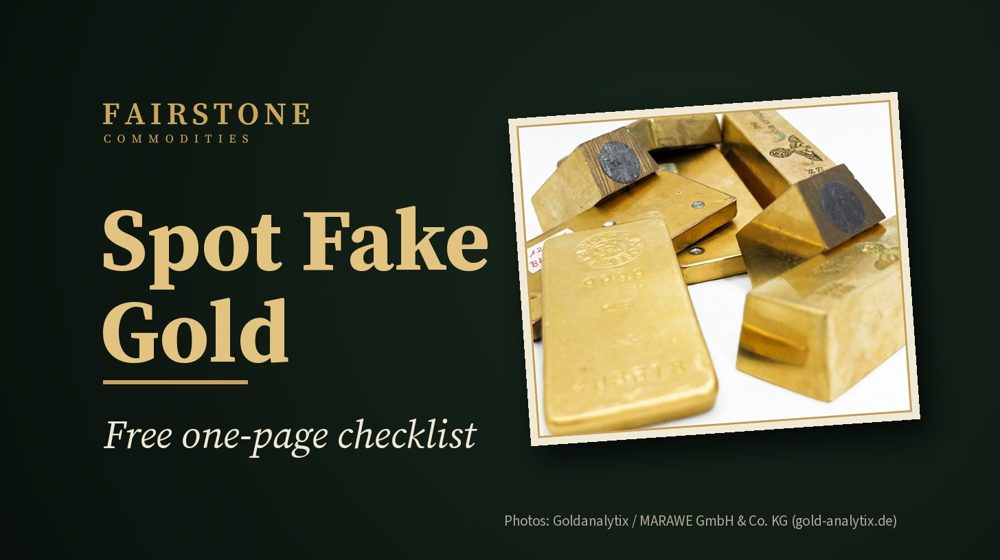
- Testing devices such as those from Goldanalytix measure inside the metal, not just the surface.
- Ultrasonic testing or assay can confirm large bars.
7. If in doubt
- Film yourself opening and weighing any second-hand purchase.
- Take it to a reputable dealer or assay office for testing, and watch them test it.
- Bought online? Raise an “item not as described” claim with the platform or payment provider promptly.
General education only, not financial or investment advice. No test is 100% conclusive, so use several and get professional testing when unsure. Specs are a general guide: always check the mint or refiner’s current published figures. Fairstone Commodities accepts no liability for losses arising from reliance on this checklist.